
How to Brighten a Dark Room Without Adding Windows – 7 Practical Ideas for Scottish Homes
Is there a room in your home that always feels dark, even in the middle of the day? Perhaps it’s a hallway with no windows, a north-facing kitchen, a gloomy living room or a bathroom that relies entirely on electric lighting.
It’s a common problem in Scottish homes, particularly in older properties, terraced houses and homes where neighbouring buildings, extensions or trees block natural daylight.
The good news is that you don’t necessarily need to install new windows or undertake major building work to make a room feel brighter.
From simple decorating changes to innovative daylighting systems, here are seven practical ways to brighten a dark room and make your home feel lighter, more welcoming and enjoyable to live in.

1. Choose Lighter Colours for Walls and Ceilings
One of the simplest ways to make a dark room feel brighter is to reconsider your colour scheme.
Light-coloured walls and ceilings reflect more of the available light around a room, helping it feel more open and spacious.
Soft whites, warm creams and pale neutral shades are particularly effective, although you don’t necessarily need to paint everything brilliant white.
A few ideas worth considering:
- Choose warm, light colours that complement your flooring and furniture.
- Paint the ceiling a lighter shade to help create a feeling of height.
- Consider finishes that reflect light gently without creating excessive glare.
- Avoid large areas of very dark colour in rooms that already receive little daylight.
However, there’s one important limitation.
Light-coloured paint can only reflect the light that’s already there.
If your hallway or bathroom has no windows, changing the colour scheme won’t introduce any additional natural daylight.
2. Use Mirrors to Reflect Existing Daylight
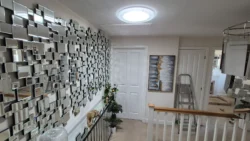
Mirrors are another relatively inexpensive way to make a dark room feel brighter.
Positioning a large mirror opposite or adjacent to a window can help reflect natural daylight further into the space.
This can be particularly effective in narrow hallways, smaller living rooms and bedrooms with limited window space.
Mirrors can also make rooms feel larger by creating a greater sense of depth.
For the best results, consider placing mirrors where they can reflect daylight rather than simply reflecting another dark wall.
Of course, just like pale paint, mirrors can’t create daylight. They can only make better use of the light already entering your home.
3. Replace Solid Internal Doors with Glazed Doors
If your hallway, landing or kitchen is particularly dark, it may be possible to borrow daylight from an adjoining room.
Replacing a solid internal door with a glazed or partially glazed alternative allows natural light to pass between spaces.
Frosted glass can provide privacy while still allowing some daylight through, making it particularly useful for certain internal rooms.
This approach can work well where a bright living room or kitchen sits alongside a darker hallway.
However, glazed doors aren’t always suitable, particularly where fire-rated doors are required.
And if the adjoining room is also relatively dark, the improvement may be limited.
4. Make the Most of Your Existing Windows
Sometimes a room feels darker than necessary because the available daylight is being restricted.
Heavy curtains, deep window recesses, furniture and external obstructions can all reduce the amount of natural light reaching the interior.
Consider replacing heavy curtains with lighter window coverings, keeping window glass clean and avoiding tall furniture immediately beside windows.
Outside, carefully managing overgrown shrubs or trees may also help, where appropriate.
These changes can make a noticeable difference without significant expense.
But what if your windows face north, are overshadowed by neighbouring buildings or simply aren’t large enough to provide adequate daylight?
That’s when it may be worth considering a different way of bringing natural light into the room.
5. Improve Your Artificial Lighting
Modern LED lighting can make a considerable difference to a dark room.
Rather than relying on a single ceiling light, consider combining different types of lighting.
For example, recessed ceiling lights can provide general illumination, while wall lights, table lamps and under-cabinet lighting help brighten particular areas.
Choosing an appropriate colour temperature can also make a room feel more comfortable.
However, although artificial lighting can be extremely effective, it isn’t quite the same as natural daylight.
Daylight changes throughout the day, connecting our indoor environments with the outside world.
And, of course, electric lighting uses electricity whenever it’s switched on.
Wouldn’t it be better if your room could benefit from natural daylight during the day, without needing the lights on quite so often?
6. Consider Installing a Roof Window
If your room is directly beneath a suitable roof, a roof window or skylight may be an excellent way to introduce natural daylight.
Roof windows can provide generous amounts of light and, depending on the design, views of the sky and additional ventilation.
They’re particularly popular in loft conversions, extensions and rooms with sloping ceilings.
However, installing a traditional roof window isn’t always practical.
You may have a room with a flat ceiling and a loft space above it, or perhaps the room you want to brighten is some distance from the roof.
In other cases, structural alterations, internal finishing and the size of the required opening can make a conventional roof window less attractive.
Fortunately, there’s another solution.
7. Bring Natural Daylight into Your Home with Solatube
What if you could bring natural daylight into a dark hallway, kitchen, bathroom or living room without installing a traditional window?
That’s exactly what a Solatube Tubular Daylighting System is designed to do.
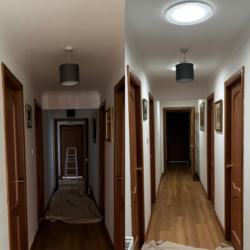
Solatube captures natural daylight at roof level and transfers it through highly reflective rigid tubing to a discreet diffuser in the ceiling below.
The result is genuine natural daylight entering a room that might otherwise depend heavily on electric lighting.
How Does Solatube Work?
A Solatube system has three main components.
-
A roof-mounted daylight collector
The specially designed dome captures daylight from the sky and directs it into the system.
Unlike a conventional roof window, Solatube’s collector incorporates optical technology designed to make effective use of available daylight.
-
Highly reflective rigid tubing
The daylight travels through Solatube’s Spectralight® Infinity tubing, which has a reflectivity of up to 99.7%.
This highly efficient reflective surface helps transfer daylight through the roof space with minimal losses at each reflection.
The rigid tubing can also incorporate engineered bends and offsets, allowing it to navigate around many obstacles within the roof space.
-
A ceiling diffuser
Finally, the daylight passes through a ceiling diffuser, spreading natural light into the room below.
The diffuser sits neatly within the ceiling and is available in different styles to suit the room.
Does Solatube Work on Cloudy Days in Scotland?
This is one of the questions we’re asked most frequently.
And understandably so!
Scotland isn’t exactly famous for uninterrupted sunshine.
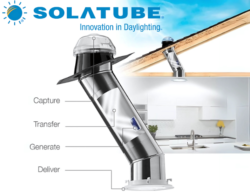
The good news is that Solatube doesn’t require direct sunshine to work.
Its roof-mounted collector is designed to capture available daylight, including the diffuse daylight present on cloudy and overcast days.
Even on a typical grey Scottish day, there can be useful daylight available outdoors that can be redirected into an otherwise dark interior.
Naturally, the amount of light delivered will vary depending on the weather, season, roof position and installation.
But the important point is that Solatube uses natural daylight rather than relying on direct sunshine.
Which Rooms Can Benefit from Solatube?
Over more than 20 years of installing Solatube systems throughout Scotland, we’ve helped homeowners introduce natural daylight into all sorts of spaces.
Some of the most popular applications include:
Dark hallways and landings
Hallways are often located in the centre of a home, away from external windows. A Solatube can transform the feeling of these spaces by introducing daylight from above.
Kitchens
Even kitchens with existing windows can feel dark, particularly where they face north or are overshadowed by neighbouring buildings.
Additional daylight from above can make the space feel brighter and more welcoming.
Bathrooms and shower rooms
Internal bathrooms often rely entirely on electric lighting. Solatube can introduce natural daylight without compromising privacy.
Living rooms
A living room with small windows, a deep floor plan or limited daylight can benefit from additional natural light.
Utility rooms and walk-in wardrobes
These smaller internal spaces are frequently overlooked when it comes to daylighting, but they can be excellent candidates for a Solatube.
Why Not Just Install a Flexible Sun Tunnel?
Not all daylight tunnels perform in the same way. Find out more in our guide to Solatube vs flexible light tunnels.
Some systems use flexible, corrugated tubing to transfer daylight from the roof to the ceiling.
While flexible tubing can be convenient to install, its internal surface can scatter light and reduce the amount reaching the room below.
Solatube uses rigid, highly reflective tubing designed specifically to maximise daylight transmission.
This becomes particularly important where the tube needs to travel a longer distance or negotiate bends.
When the whole purpose of installing a daylight tunnel is to brighten a room, the efficiency of the system really matters.
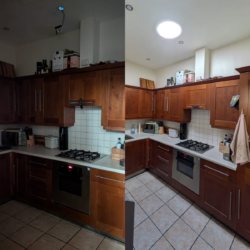
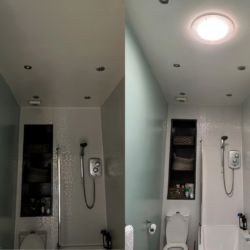
Real Solatube Installations Across Scotland
At Solatube Scotland, we’ve installed daylighting systems in homes throughout Edinburgh, Glasgow, Aberdeen, Dundee, the Scottish Borders and beyond.
Every property is different.
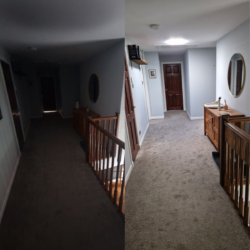
Sometimes a single Solatube is enough to make a significant difference to a dark hallway or bathroom.
In larger rooms, two or more systems may be recommended to provide a better distribution of daylight.
The most appropriate solution depends on the size and layout of the room, the roof construction and the route between the roof and ceiling.
That’s why we prefer to look at each property individually rather than suggest the same solution for everyone.
How Much Does It Cost to Brighten a Dark Room with Solatube?
The cost of installing a Solatube depends on several factors, including:
- The size and type of Solatube required.
- The distance between the roof and ceiling.
- The type of roof covering.
- Whether bends or offsets are required.
- Access and installation requirements.
A smaller system installed through a straightforward roof space will generally cost less than a larger or more complicated installation.
Although Solatube may cost more initially than some basic flexible daylight tunnels, its high-performance optical design is intended to deliver more useful daylight into the room.
And unlike decorative improvements that simply reflect existing light, a Solatube introduces an additional source of natural daylight.
Could Your Dark Room Benefit from a Solatube?
If you’re tired of switching on the lights every time you walk into your hallway, kitchen or bathroom, it may be worth exploring whether a Solatube could help.
You don’t need to know which size of Solatube you require or whether installation is possible.
Simply send us a few photographs of your room, ceiling and roof, and we’ll take a look.
With more than 20 years of experience installing Solatube systems throughout Scotland, we can provide initial advice on the most suitable solution for your home.
There’s no need to arrange a visit at this stage.
Because sometimes, the best way to brighten a dark room isn’t to change what’s inside it.
It’s to bring in more natural daylight.
Solatube Scotland – Bringing Natural Daylight into Scottish Homes for Over 20 Years.